Driveways Chelmsford: Engineered Resin, Block Paving and Tarmac Driveway Systems
Driveways Chelmsford delivers professionally engineered driveway systems designed to withstand the structural, environmental, and operational demands placed on external pavements in Chelmsford and the surrounding areas. A driveway is not a decorative surface. It is a load-bearing ground engineering system that must be designed around soil conditions, water movement, vehicle loading, access geometry, and long-term settlement behaviour. When these factors are not correctly engineered, driveway failure occurs regardless of the surface material used. Chelmsford presents specific challenges for driveway construction. Predominantly clay soils, variable bearing capacity, seasonal ground movement, and surface water management requirements all directly influence how a driveway system must be designed and built. Driveways Chelmsford approaches every project at the system level, engineering each installation around excavation depth, sub-base specification, compaction methodology, drainage behaviour, edge restraint strategy, and surface performance so the completed driveway performs reliably under real operating conditions rather than simplified assumptions.
Driveway systems are subjected to repeated vehicle loads, turning forces, braking stresses, thermal expansion, rainfall, freeze–thaw cycles, and surface water flow. Flat gradients, poor drainage design, insufficient sub-base depth, or inadequate compaction can lead to rutting, cracking, block movement, standing water, joint washout, and edge failure even when high-quality materials are used. These outcomes are not material defects. They are system design and construction failures. Driveways Chelmsford designs and installs driveway systems that account for these forces from the outset, delivering surfaces that maintain structural stability, drainage performance, and visual integrity throughout their intended service life. Different driveway systems perform differently under load, water exposure, and ground movement. Resin-bound driveways function as permeable pavement systems, relying on controlled water infiltration through the surface and sub-base. Block paving driveways operate as segmental pavement systems, distributing loads through interlock and edge restraint. Tarmac driveways function as flexible pavement systems, requiring correct layer thickness, edge support, and drainage control to prevent deformation. Driveways Chelmsford selects and engineers each system based on ground conditions, loading requirements, drainage constraints, and regulatory considerations rather than aesthetics alone. Driveways Chelmsford provides a full spectrum of driveway system services, including new driveway construction, driveway replacement, targeted driveway repairs, surface resurfacing, and long-term maintenance. Every service is delivered with a focus on structural durability, SUDS compliance, drainage control, and predictable long-term performance for residential and commercial properties. By integrating correctly specified sub-bases, engineered drainage solutions, appropriate surface systems, and disciplined installation practices, Driveways Chelmsford delivers driveway systems that reduce life-cycle costs while improving durability, safety, and long-term performance across Chelmsford properties.
What Is a Driveway System and How Is It Used in Chelmsford?
A driveway system is an external pavement assembly designed to support vehicle loads while managing surface water and ground movement. In Chelmsford, driveway systems are commonly constructed over clay soils, which expand and contract with moisture changes and place additional demands on sub-base design and drainage control. Unlike simple surface finishes, a driveway system consists of multiple engineered layers working together to distribute loads and manage water. A complete driveway system includes excavation to formation level, geotextile separation where required, a compacted sub-base (typically MOT Type 1 or Type 3 depending on permeability requirements), edge restraints to prevent lateral movement, controlled falls for drainage, and the selected surface course. System performance depends on how these components interact, not on the surface material alone. Insufficient sub-base depth can lead to settlement and rutting. Inadequate compaction can cause surface deformation. Poor drainage design can result in standing water, accelerated wear, and structural failure. In Chelmsford, compliant driveway construction must also account for surface water management regulations, permitted development rules, and highway interfaces. This includes designing permeable systems where required and advising on dropped kerb applications managed by Essex County Council Highways. Long-term driveway performance depends on correct system design, professional installation, and appropriate maintenance rather than surface choice alone.
What Types of Driveway Systems Does Driveways Chelmsford Install?
Driveways Chelmsford designs and installs multiple engineered driveway system types, each selected based on ground conditions, drainage behaviour, loading requirements, and long-term performance expectations across Chelmsford and the surrounding areas. Driveway systems are not interchangeable finishes. Each system behaves differently under vehicle loads, water exposure, ground movement, and seasonal conditions, particularly on local clay soils. System selection determines how loads are distributed, how surface water is managed, how movement is accommodated, and how the driveway performs over time. The primary driveway systems installed by Driveways Chelmsford include permeable resin-bound systems, segmental block paving systems, flexible asphalt systems, and loose aggregate gravel systems, each engineered with the appropriate sub-base, edge restraint, and drainage strategy to meet SUDS and planning requirements where applicable.
- Resin-bound driveway systems
- Block paving driveway systems
- Tarmac (asphalt) driveway systems
- Gravel and shingle driveway systems
1. Resin-Bound Driveway Systems
Resin-bound driveways function as permeable pavement systems, allowing surface water to drain vertically through the surface and into the underlying structure. The system is formed by mixing UV-stable aliphatic resin with washed, kiln-dried aggregates, typically in 1–3 mm or 2–5 mm blends, and hand-trowelling the material to a smooth finish at approximately 18–24 mm thickness for driveways. True permeability depends on the full system build-up, not the surface alone. On Chelmsford’s clay soils, resin systems are typically installed over an open-graded Type 3 sub-base at around 150–200 mm depth, separated by a geotextile and combined with a porous asphalt or appropriately vented concrete base. Falls of approximately 1:80 are engineered toward drainage points to manage excess surface flow. Anti-slip broadcast aggregates are specified at entrances, turning areas, and slopes to maintain grip under wet conditions. Installation is carried out in controlled weather conditions, generally between 5–25 °C, to prevent resin blooming or whitening. When properly engineered, resin-bound driveway systems offer fast drainage, low maintenance, and long-term surface stability with minimal ongoing intervention.
2. Block Paving Driveway Systems
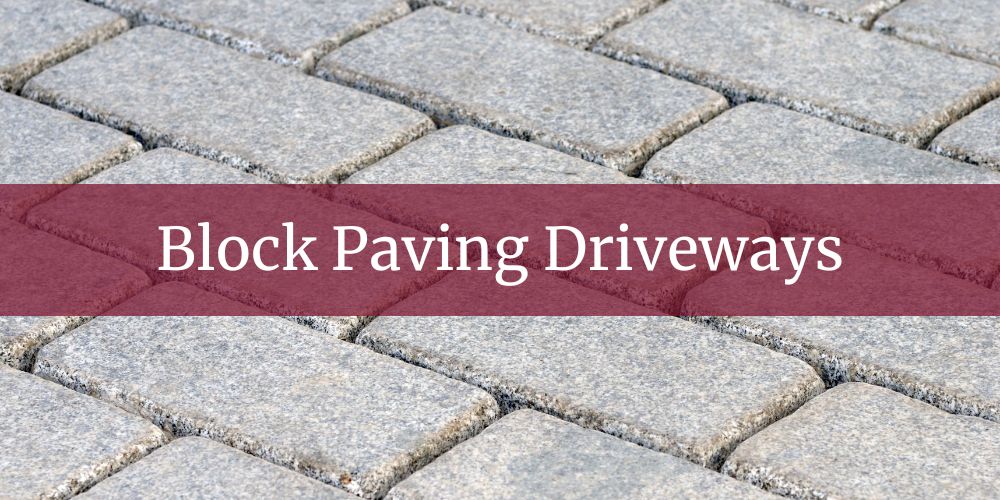
Block paving driveways operate as segmental pavement systems, distributing vehicle loads through interlocking units restrained laterally by solid edge detailing. Concrete or clay pavers are laid over a compacted MOT Type 1 sub-base with a 30–40 mm screeded laying course, with block thickness selected according to loading requirements—typically 50–60 mm for domestic vehicles and 80 mm for higher loads. On local clay soils, sub-base depths commonly range from 150–250 mm and are often separated from the formation by a geotextile to control movement and prevent contamination. Load distribution and surface stability are heavily influenced by laying pattern, with 45° and 90° herringbone providing superior interlock. Drainage falls of around 1:60 to 1:80 are set toward channel drains or soakaways to protect joint integrity and manage surface water. Where permeability is required, block paving systems can be engineered using a Type 3 sub-base, a 2–6 mm bedding layer, and permeable joint fill to meet SUDS requirements. Individual blocks can be lifted and reinstated for access or repair, and long-term performance is supported by periodic joint sand replacement and optional breathable sealing.
3. Tarmac (Asphalt) Driveway Systems
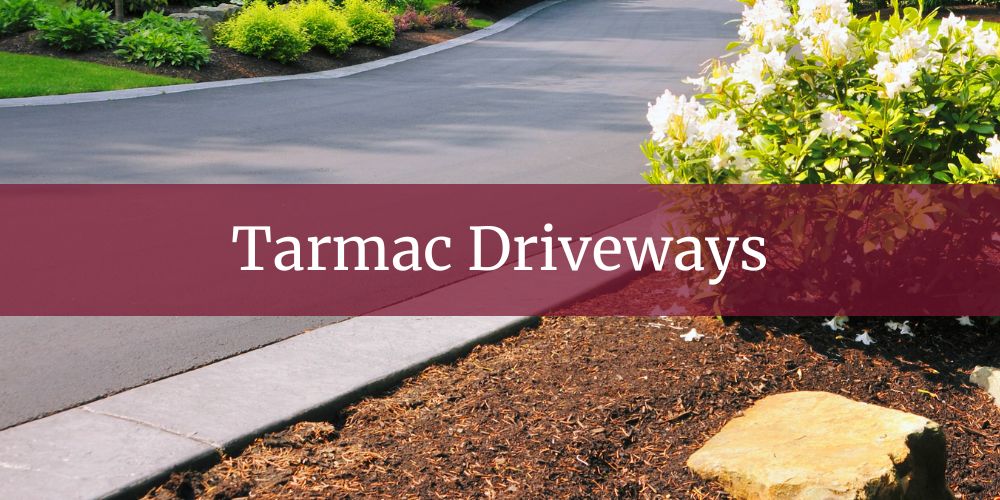
Tarmac driveways function as flexible pavement systems, designed to accommodate traffic loading and minor ground movement through layered asphalt construction. Typical builds consist of a binder course—commonly AC 20 dense bin 40/60 at 50–60 mm—overlaid with a wearing course such as AC 10 close surf 40/60 at 25–30 mm, bonded with a tack coat between layers. These systems are installed over a well-compacted MOT Type 1 sub-base, usually 150–250 mm deep on Chelmsford’s clay soils, with geotextile separation where ground conditions require additional stability. Drainage falls of approximately 1:60 to 1:80 direct water toward channels, threshold drains, or inset drainage details, with permeable or porous asphalt options specified where SUDS compliance is necessary. Edge restraint is critical to prevent deformation and edge breakdown, typically achieved with concrete kerbs, granite setts, or steel edging. Correct installation conditions, controlled curing, and appropriate traffic management during early life are essential to long-term performance.
4. Gravel and Shingle Driveway Systems
Gravel and shingle driveways operate as loose aggregate pavement systems, relying on permeability and confinement rather than structural rigidity. These systems are naturally permeable and well suited to permitted development where surface water is required to infiltrate directly into the ground. On clay soils, performance depends on an open-graded Type 3 sub-base at approximately 150–200 mm depth with geotextile separation to prevent fines migration. Stabiliser grids, typically around 40 mm deep, are commonly specified to reduce rutting, control stone movement, and improve load distribution in turning areas. Angular aggregates in the 10–20 mm range provide better interlock and traction than rounded shingle. Solid edge restraint contains the surface and protects adjacent structures, while threshold drainage details help prevent stone migration onto highways or pavements. Ongoing maintenance focuses on redistribution of aggregate, weed control, and periodic top-up rather than structural repair.
Have a question about an upcoming project?
What Factors Determine Driveway System Performance in Chelmsford?
Driveway system performance in Chelmsford is determined by system design, not surface material selection alone. Driveways must function as load-bearing external pavement systems capable of supporting repeated vehicle loads, managing surface water, accommodating ground movement, and maintaining structural integrity under seasonal environmental change. These combined structural, environmental, and operational demands cannot be met through generic installation practices or surface-only specification. Chelmsford presents specific performance challenges for driveway systems. Predominantly clay soils expand and contract with moisture variation, placing stress on sub-bases and surface layers. Driveways are subjected to concentrated vehicle loads, braking and turning forces, rainfall runoff, freeze–thaw cycles, and differential settlement across thresholds and access points. Inadequate excavation depth, incorrect sub-base specification, poor compaction, insufficient drainage design, or weak edge restraint can lead to rutting, cracking, surface movement, joint failure, and standing water even when high-quality materials are used. These outcomes are not material defects. They are system design and construction failures. Driveways Chelmsford focuses on engineered driveway systems because long-term performance depends on how all system components interact under real operating conditions. Sub-base depth and grading, compaction methodology, drainage layout, edge restraint strategy, surface selection, and local regulatory requirements all directly influence how driveway systems perform over time. By aligning system design, materials, and installation methodology with Chelmsford’s ground conditions and environmental forces, Driveways Chelmsford delivers driveway systems that perform predictably and retain structural integrity throughout their intended service life.
- Driveways Chelmsford engineers driveway systems to account for ground bearing capacity, clay soil behaviour, and long-term settlement risk.
- Driveways Chelmsford designs every driveway system to manage surface water effectively through correct falls, drainage features, and permeable build-ups where required.
- Driveways Chelmsford specifies sub-base depth, grading, and compaction to support vehicle loading, turning forces, and braking stresses without deformation.
- Driveways Chelmsford incorporates edge restraint and confinement strategies to prevent lateral movement and surface failure.
- Driveways Chelmsford integrates these system-level considerations into every project to deliver durable, compliant driveway systems across Chelmsford properties.
These engineered driveway system decisions produce the following performance outcomes:
- Engineered sub-base design → distributes vehicle loads evenly → rutting and settlement are avoided
- Drainage design and falls → evacuate surface water efficiently → standing water and washout do not occur
- Correct compaction methodology → limits post-installation movement → surfaces remain level and stable
- Edge restraint and confinement → resist lateral forces → block creep and edge failure are prevented
- System-appropriate surface selection → responds to ground and water behaviour → long-term durability is maintained
Each of these outcomes results from coordinated driveway system design decisions, which are addressed in detail below.
1. Driveways Chelmsford Engineers Driveway Systems to Perform on Clay Soils and Variable Ground Conditions
Driveways Chelmsford engineers driveway systems around the ground conditions common across Chelmsford, where clay soils dominate and ground behaviour changes with seasonal moisture variation. Clay soils expand when wet and contract as they dry, creating vertical and lateral movement that places stress on driveway structures. If this movement is not accounted for in excavation depth, sub-base specification, and compaction methodology, driveway systems can settle unevenly, rut under load, or crack prematurely. Driveways Chelmsford evaluates formation strength, soil composition, and moisture sensitivity before specifying sub-base depth and grading. Where clay soils present higher movement risk, deeper sub-bases and geotextile separation are used to stabilise the formation and prevent fines migration. Mechanical compaction is carried out in controlled layers to achieve consistent density, ensuring that vehicle loads are distributed evenly and long-term settlement is minimised. By engineering the system around ground behaviour rather than surface appearance, driveway performance is maintained over time.
2. Driveways Chelmsford Designs Driveway Systems to Manage Surface Water and Drainage Requirements
Surface water management is a primary determinant of driveway system performance in Chelmsford. Rainfall, runoff from adjacent roofs, and impermeable surfaces can place significant hydraulic demand on driveways if drainage is not engineered correctly. Standing water accelerates surface wear, weakens jointing, and increases sub-base saturation, which in turn reduces load-bearing capacity. Driveways Chelmsford designs driveway systems with engineered falls, drainage channels, soakaways, and permeable build-ups where required to manage water efficiently. Drainage gradients are established to direct water away from buildings and access points while preventing uncontrolled runoff onto public highways. Where SUDS compliance is necessary, permeable surface systems and open-graded sub-bases are specified to allow controlled infiltration. These drainage decisions are integrated into the overall system design so water management supports, rather than undermines, long-term structural performance.
3. Driveways Chelmsford Engineers Driveway Systems to Withstand Vehicle Loads and Turning Forces
Driveway systems must withstand repeated vehicle loading, braking forces, and turning stresses concentrated at entrances, parking areas, and turning circles. These forces are significantly higher than pedestrian loading and vary depending on vehicle weight, frequency of use, and access geometry. Without adequate sub-base depth, compaction, and surface selection, these loads can cause deformation, surface movement, and structural fatigue. Driveways Chelmsford engineers driveway systems to distribute vehicle loads through the full depth of the pavement structure. Sub-base thickness is specified according to expected loading, while surface systems are selected based on how they respond to shear and compressive forces. Turning areas and access points are reinforced through additional structural depth or confinement strategies to prevent rutting and surface breakdown. By designing for real vehicle behaviour rather than nominal loading assumptions, driveway systems remain stable under everyday use.
4. Driveways Chelmsford Accounts for Edge Restraint, Thresholds, and Access Geometry
Edge restraint and confinement play a critical role in driveway system performance, particularly on clay soils where lateral movement can occur. Without adequate edge restraint, segmental and flexible driveway systems are vulnerable to block creep, edge collapse, and progressive surface failure. Threshold transitions at garages, pavements, and highways also represent stress points where movement and water ingress are concentrated. Driveways Chelmsford specifies edge restraint solutions such as concrete kerbs, granite setts, or steel edging to provide lateral support and maintain surface alignment. Threshold details are engineered to manage load transfer and water flow while preventing surface migration onto adjacent areas. Access geometry, including driveway width, slope, and turning radius, is assessed to ensure forces are controlled and distributed correctly across the system. These details are integrated into the design phase rather than treated as cosmetic add-ons.
5. Driveways Chelmsford Integrates System-Level Design Into Every Driveway Project
Driveways Chelmsford integrates ground conditions, drainage behaviour, load requirements, edge restraint strategy, surface selection, and regulatory considerations into a single engineered driveway system. Treating these elements in isolation increases the risk of conflicting design decisions and premature failure. System-level integration ensures that each component supports the others under real operating conditions. By coordinating excavation, sub-base construction, compaction, drainage, and surface installation into a unified design approach, Driveways Chelmsford delivers driveway systems that perform predictably across Chelmsford properties. This integrated methodology extends service life, reduces corrective maintenance, and ensures compliance with local drainage and planning requirements. Long-term driveway performance is achieved through disciplined system design, professional installation, and alignment with the physical realities of the site.
When Does a Property Need a Driveway System Assessment in Chelmsford?
If a property has an existing driveway system, even minor surface issues such as cracking, block movement, rutting, joint washout, or standing water can escalate into wider system failure under repeated vehicle loading, seasonal ground movement, rainfall, and freeze–thaw cycles. On Chelmsford’s clay soils, underlying weaknesses in sub-base construction, compaction, drainage design, or edge restraint often develop gradually and may not be immediately visible at the surface. Driveways Chelmsford assesses how driveway systems are performing under real operating conditions, including surface condition, sub-base stability, drainage behaviour, edge restraint integrity, access geometry, and compliance with current surface water management requirements. This allows structural and drainage-related issues to be identified before settlement, deformation, or water ingress spreads through the pavement structure and leads to costly corrective works. If a driveway is experiencing recurring puddling, surface movement, loose blocks, cracking, rapid wear, or difficulty draining water away from buildings or access points, Driveways Chelmsford can evaluate the driveway system and determine the technically appropriate next step. This may include targeted repairs, drainage improvements, surface resurfacing, or full driveway system replacement depending on the condition of the underlying structure. A professional driveway system assessment provides clarity on how the driveway is actually performing, why issues are occurring, and what level of intervention is required to restore long-term structural performance and compliance. This system-led approach ensures decisions are based on engineering realities rather than surface appearance alone.
A Recent Driveway Project in Chelmsford
“We originally thought we just needed a gravel finish, but Driveways Chelmsford identified that the previous groundworks had been done incorrectly, with the wrong type of hardcore causing drainage issues. They stripped everything back, installed the correct granite MOT sub-base, and carefully regraded the site to deal with slope and water movement properly. The result was a large, stable gravel driveway and hardscaped area that finally performs as it should. The work was well organised, technically sound, and carried out exactly as agreed.” Jonathan Rogers, Chelmsford